
At the Community Foundation for Northern Virginia, we work with business leaders and owners to structure charitable giving plans that support both corporate goals and community impact. Whether your corporate clients give directly to local nonprofits or organize philanthropy through a fund at the Community Foundation, thoughtful planning has always mattered. In 2026, it matters even more.
As an attorney, CPA, or financial advisor, you’re likely well aware that new rules governing corporate charitable deductions are now in place. These changes are significant, and they are influencing how companies approach giving. The good news is that with a bit of planning—and the right partners—your business clients can continue to support the causes they care about in a way that is both impactful and tax-efficient.
Here are key points for your work with charitable corporate clients:
The new 1% “floor” is now a reality.
As of January 1, 2026, corporations may deduct charitable contributions only to the extent that total giving exceeds 1% of taxable income. In practical terms, this means that a company with $100 million in taxable income must contribute more than $1 million before any portion of its charitable giving becomes deductible—and even then, only the amount above that threshold qualifies for a deduction.
For many companies, this is a meaningful shift. Gifts that previously generated a tax benefit may no longer do so unless they are structured differently or timed strategically. This is where the Community Foundation can be of assistance. By working with our team, your corporate clients can evaluate whether to concentrate their giving in certain years, use a corporate donor-advised fund to manage timing, or align contributions with broader financial planning goals. In some cases, bundling multiple years of anticipated giving into a single year may help exceed the threshold and unlock a deduction that would otherwise be lost.
The 10% “ceiling” still applies—and now interacts with the floor.
The long-standing rule allowing corporations to deduct charitable contributions up to 10% of taxable income remains in place. However, now that the 1% floor is also in effect, both rules must be considered together. Only the portion of giving that falls between 1% and 10% of taxable income is deductible in a given year.
Amounts that fall below the floor or exceed the ceiling are not lost, but they are subject to carryforward rules for up to five years. Even so, using those carryforwards effectively requires careful coordination. In any future year, deductions are available only if total giving again exceeds the 1% floor and the combined total of current and carried-forward contributions remains within the 10% cap.
This layering of rules adds complexity, especially for companies with fluctuating income or evolving giving priorities. The Community Foundation can serve as a central hub for tracking, coordinating, and implementing your clients’ strategies over time. For example, a corporate donor-advised fund can help your business client separate the timing of tax recognition from the timing of grantmaking, allowing you to support nonprofits consistently while managing deductions more intentionally.
Timing and structure matter more than ever.
Now that these rules are in effect, this is an ideal time to encourage your business clients to revisit their company’s overall philanthropic strategy.
Working with the Community Foundation, your clients can model different scenarios based on projected income and giving levels. You can also help your clients explore how a corporate fund might help smooth out year-to-year variations, ensuring that charitable dollars continue to flow to the community even when tax considerations shift. Additionally, the Community Foundation team can help your corporate clients align giving strategies with the company’s broader goals, including employee engagement, community visibility, and long-term impact.
Don’t overlook sponsorship opportunities.
It’s also important to remember that not all support for charitable organizations is treated the same way for tax purposes. Payments that provide a direct business benefit—such as advertising or brand visibility—may be deductible as ordinary business expenses rather than as charitable contributions if the payment provides a direct business benefit, such as advertising, rather than being considered a pure charitable donation. Under IRS rules, a business must substantiate the benefit received.
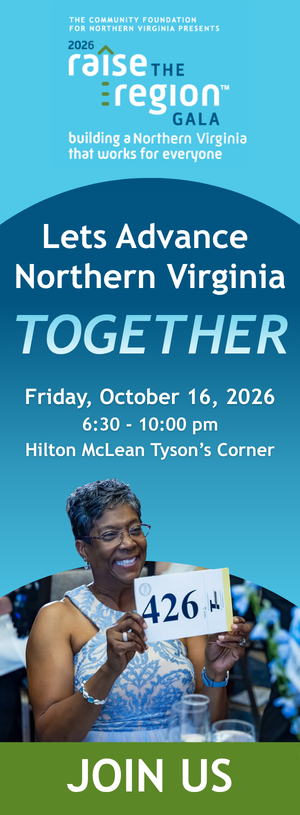
The Community Foundation's Corporate Partners Network program supports the Community Foundation’s signature events and initiatives—including the Raise the Region Gala and Shape of the Region Conference—while also amplifying your impact through pooled contributions to our Community Investment Funds.
This model allows companies to:
- Participate in high-profile events that celebrate philanthropy and thought leadership.
- Gain visibility and recognition among Northern Virginia’s business and nonprofit community.
- Multiply impact by joining other partners in funding larger, more strategic grants that address critical needs across education, health, and economic mobility.
Keep going!
These changes to corporate charitable deduction rules do not diminish the importance of corporate philanthropy—they simply raise the bar for thoughtful planning. With the right strategy, your corporate clients can continue to make a meaningful difference in the community while effectively navigating the new landscape.
As always, the team at the Community Foundation is here to help you. Whether your corporate client is refining an existing giving program or building a new approach from the ground up, we are happy to work with you on behalf of your clients to put a plan in place that reflects each business’s goals and maximizes impact. This email address is being protected from spambots. You need JavaScript enabled to view it.—we look forward to the conversation.
This material is intended for informational/educational purposes only and should not be construed as investment, tax, or legal advice. Please contact your financial, tax, and legal professionals for more information specific to your situation.
The Community Foundation team is happy to help you structure charitable giving tools and plans to achieve your clients’ philanthropic goals—whether through beneficiary designations or any other type of charitable giving vehicle. This email address is being protected from spambots. You need JavaScript enabled to view it.!
 Questions?