
By Judy L Redpath, CFP®, CPWA®, AIF®
Charitable planning and giving is a very personal activity for individuals and families. As advisors, we often wait to introduce the topic of philanthropy until our clients have accumulated much of their wealth and we are discussing estate planning strategies and considerations under the rubric of a wealth transfer conversation. Whether we are currently working with multigenerational families or are proposing to be introduced to our clients’ children and grandchildren, family-based philanthropy can serve a much broader purpose. When well structured, charitable planning and giving becomes a powerful tool for ongoing family engagement, education, and aligning values to promote a legacy.
For financial advisors and estate planning professionals, facilitating family centered meetings and/or projects on charitable giving can strengthen client relationships while addressing complex planning objectives.Defining Values Before Recommending Possible Solutions
Understanding the ‘why’ of donor intent is important before proposing any possible solutions (e.g., donor advised funds, private foundations, charitable trusts, etc.) Effective planning begins with conversations about purpose, intentions, who will be involved and how, and the proposed size and frequency of charitable giving. We like to start by asking questions such as:- What are your priorities? Flexibility, family involvement, lasting legacy, annual giving?
- What impact do you want to have? Immediate? Lasting?
- How do you want to involve members of your family? Who will be involved in decision-making and/or recommendations?
- How public or private do you want your philanthropic efforts to be?
This progressive involvement can function as a low stakes training ground for future fiduciary responsibilities—particularly valuable for families concerned about readiness or entitlement.
Educating Our Clients Regarding Charitable Giving Options
We need to consider how complex, tax-efficient, enduring and aligned with our client’s objective a charitable giving option may be. Several frequently used options include:- One-Time Gifts. Making a one-time gift directly to a non-profit or charitable organization can be a good way to start a conversation on family charitable giving. We have a client family where the senior generation provides the funds and each family member announces at the Thanksgiving table where they want their budgeted share of the donation to go that year. This approach fosters gratitude and an attitude of giving across generations.
- Donor Advised Funds (DAFs). Donor-Advised Funds (DAFs) can be established with a relatively small amount of funds and added to in the future. It’s a good choice for a donor who wants a current year tax deduction and flexibility in making donations over time. Since the donor receives the tax benefit immediately, the contribution is irrevocable. This means that the assets cannot be returned to the donor for any reason. Once the donor makes the contribution the sponsoring organization has legal control over the funds. The donor or donor’s representative, however, retains advisory privileges. Naming a successor grantor or grantors who are in the next generation(s) provides a context for making grant recommendations that are aligned with the donor’s values and area(s) of focus. Our clients use DAFs to introduce younger family members to charitable giving by having them participate in making recommendations for grants without giving them control or addressing inheritance issues.
- Private Foundation. A private foundation may be appropriate for a client family with significant assets to contribute that seeks to leave a lasting legacy and wants control and hands on family involvement. It’s a more complex solution that requires thoughtful planning regarding governance and formal succession planning, good understanding of the costs, compliance, and required annual distributions.
- Scholarships. Endowing a scholarship may be a good solution for clients whose philanthropic interests are to leave a lasting legacy by supporting higher education opportunities for students. Scholarships may honor an individual, be used to give back to an alma mater or within the community and/or to assist students majoring in a particular discipline.
What are the potential benefits?
Helping our clients and their families make charitable planning and giving a family affair offers several prospective benefits. The obvious one is that charitable giving can help reduce tax liability under our current tax laws. It affords our clients the opportunity to communicate their values within and across generations with the objective of creating shared values that endure across generations. Focused family charitable giving also may help facilitate increased and/or improved communications within the family and align family wealth with philanthropic purpose. Best practices include:- Coordinating planning and reviews with a team comprising the financial advisor, estate planning attorney and accountant(s)
- Reviewing the plan and approach(es) annually or when there’s a change in tax law or the clients have a significant life event
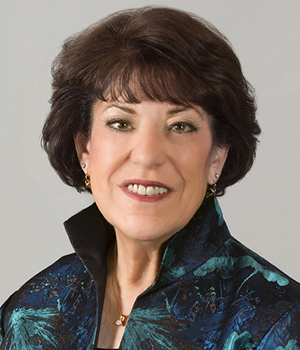 Guest Author,
Judy L Redpath, CFP®, CPWA®, AIF®
Founder
VISTA Wealth Strategies LLC
This material is intended for informational/educational purposes only and should not be construed as investment, tax, or legal advice. Please contact your financial, tax, and legal professionals for more information specific to your situation. Advisory services offered through Commonwealth Financial Network®, a Registered Investment Adviser.
The Community Foundation for Northern Virginia, VISTA Wealth Strategies LLC, and Commonwealth Financial Network® are separate and unaffiliated entities.
The Community Foundation team is happy to help you structure charitable giving tools and plans to achieve your clients’ philanthropic goals—whether through beneficiary designations or any other type of charitable giving vehicle. This email address is being protected from spambots. You need JavaScript enabled to view it.!
 Questions?